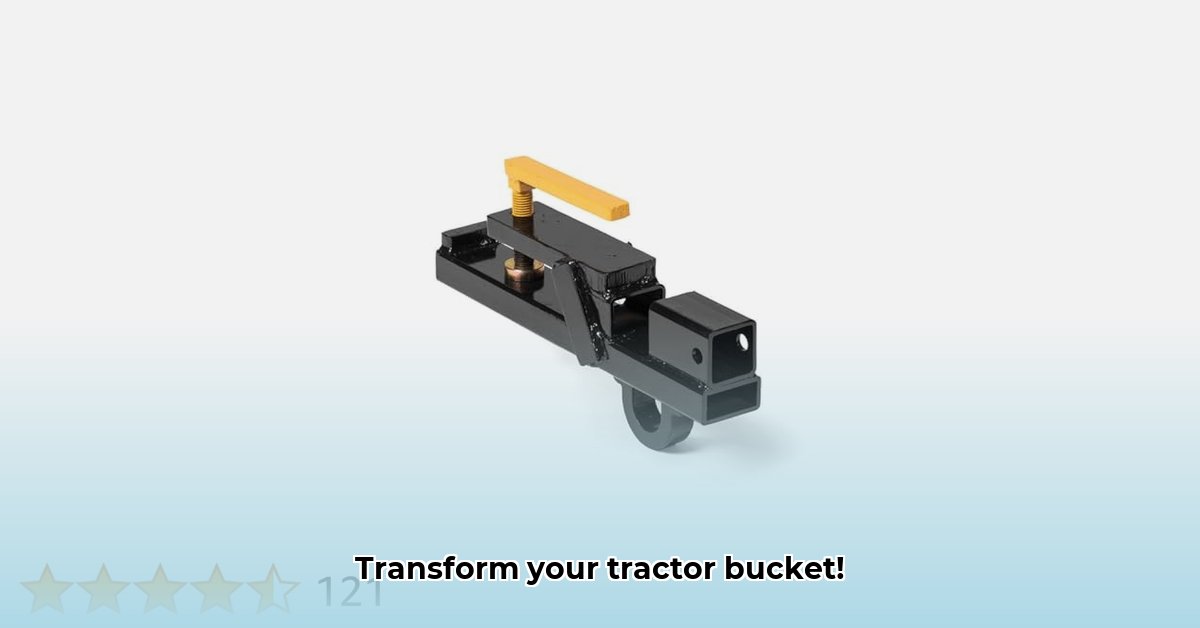
Want to maximize your farm's productivity while minimizing your environmental impact? Investing in a receiver hitch for your tractor bucket is a smart step towards sustainable and efficient farming. This comprehensive guide will equip you with the knowledge and practical steps to select, install, and maintain the right hitch for your operation, ultimately boosting efficiency and lowering your environmental footprint. For more information on tractor attachments, check out this helpful resource: tractor attachments.
Understanding Receiver Hitch Options
Choosing the right receiver hitch is paramount for optimal performance and safety. Several types cater to diverse needs and tractor sizes. Think of it like selecting the right tool for a specific job – a screwdriver for screws, not a hammer. A poorly chosen hitch can lead to inefficiency and even damage.
| Hitch Type | Material | Pros | Cons | Best Suited For |
|---|---|---|---|---|
| Category I | Steel | Durable, widely available, handles considerable loads. | Heavy, can be cumbersome. | Larger tractors, heavy-duty tasks (e.g., moving large rocks). |
| Category II | Steel | Versatile, good weight capacity, a solid all-around choice. | Relatively heavy. | Medium-sized tractors, general farming tasks. |
| Category III | Steel | Designed for the heaviest loads, exceptionally strong. | Heaviest option; requires a powerful tractor. | Very large tractors, extremely heavy loads. |
| Quick-Attach Hitches | Steel/Composite | Fast and easy attachment/detachment; enhances versatility. | Can be more expensive; may require specific implements. | Tractors frequently switching between implements. |
Material selection significantly impacts the hitch's weight and durability. Steel, a traditional choice, offers excellent strength. However, newer composite materials provide a lighter-weight alternative, potentially improving fuel efficiency. "Choosing the right material depends on the specific workload and the farmer's priorities," explains Dr. Emily Carter, Agricultural Engineering Professor at Purdue University. "Lighter materials can decrease fuel use and soil compaction, but their durability needs consideration." Isn't optimizing your fuel usage crucial for both your bottom line and environmental sustainability?
Selecting the Perfect Hitch: A Step-by-Step Guide
Choosing the right hitch involves careful consideration of several factors. A poorly matched hitch can lead to inefficiencies and even safety hazards.
Tractor Compatibility: Always consult your tractor's manual to confirm compatible hitch categories. Using an incompatible hitch can damage your tractor. Ignoring this step is akin to using the wrong-sized wrench – potentially leading to costly repairs.
Weight Capacity: Select a hitch with a weight rating exceeding the anticipated heaviest load. Overloading a hitch is extremely dangerous and can lead to accidents or equipment failure. Wouldn't you agree that safety should always be the top priority?
Durability and Material: Consider the hitch's construction and materials. Steel provides superior strength, but adds weight. Lighter composite materials offer fuel efficiency. The best choice depends on your needs and priorities.
Budget: Hitches vary in price. While the initial cost might seem higher, a durable hitch will likely save money in the long run by needing fewer repairs and replacements.
Installation and Maintenance: A Practical Guide
Proper installation and regular maintenance are key to ensuring the longevity and safety of your receiver hitch. Remember, a well-maintained hitch is a productive hitch.
Installation (Always consult your tractor and hitch manuals):
Careful Attachment: Securely attach the hitch to your tractor's three-point hitch system. Ensure all pins are correctly inserted and locked. Double-checking is crucial – a loose connection can lead to serious accidents.
Thorough Inspection: Before operation, meticulously check all connections to guarantee everything is firmly secured and safe.
Maintenance:
Regular Inspections: Routinely inspect your hitch for wear and tear (cracks, bends, loose connections). Replace damaged parts immediately.
Lubrication: Keep moving parts lubricated (following manufacturer's recommendations) to prevent corrosion and reduce friction. This extends the hitch’s lifespan.
Proper Storage: Store the hitch correctly when not in use to protect it from the elements.
Practical Applications and Environmental Benefits
Receiver hitches offer significant benefits beyond simple convenience. They directly contribute to a more sustainable and efficient farming operation.
Increased Productivity: Quickly attaching and detaching implements saves valuable time, leading to higher productivity. This translates to more work accomplished during the limited daylight hours, isn't it?
Lower Labor Costs: Reduced time spent on manual tasks saves labor costs. This is not just saving money; it also allows for more focus on strategic farming decisions.
Improved Fuel Economy: Lighter implements and efficient hitches minimize fuel consumption, directly impacting your bottom line and the environment. Did you know that reduced fuel usage can significantly lower a farm’s carbon footprint?
Environmental Benefits: Less fuel consumption means lower greenhouse gas emissions, contributing to a more sustainable farming practice. This is a crucial aspect for the future of agriculture.
The Long-Term Investment: Cost-Benefit Analysis
While there's an initial outlay, the long-term benefits of a high-quality receiver hitch typically outweigh the upfront cost. Think of it as an investment in the future of your farm.
Reduced Labor Costs: Time saved translates to direct cost savings.
Fuel Savings: Fuel costs add up over time; reduced consumption leads to significant savings.
Extended Equipment Life: Regular maintenance, facilitated by the receiver hitch, prolongs the lifespan of your equipment.
Potential Subsidies: Government subsidies or incentives for sustainable farming equipment may be available – investigate local and national programs.
The initial investment in a quality receiver hitch is often recouped through increased efficiency and reduced costs, solidifying its role as a wise and sustainable investment for your farm's future. Many successful farmers attest to its significant long-term returns. The efficient use of equipment is not merely a matter of good business practice – it is essential for sustainable agriculture.